17 Surprising Facts About Stonehenge
The short version. It is two monuments rather than one, it was a cemetery before it was a stone circle, its joints are carpentry, and the Druids had nothing to do with it. Seventeen things worth knowing before you stand in front of it.
How old it is, and what came first
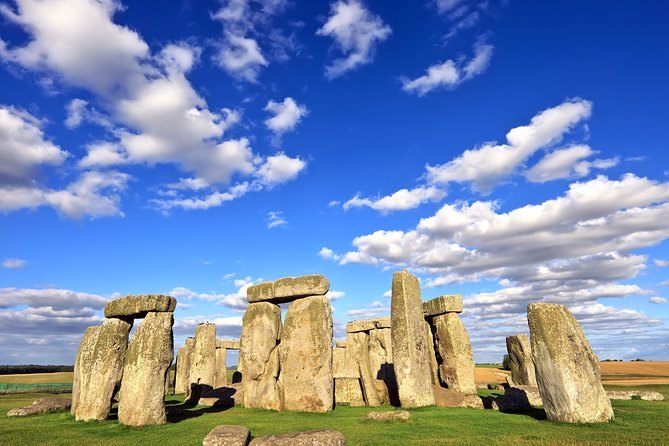
1. It is two monuments, not one. The first was a bank, a ditch and a ring of pits, built about 3000 BC. The stone circle came about five hundred years later, around 2500 BC.
2. It was a burial ground before it was a stone circle. Cremated human remains were placed in the ring of pits cut inside the bank, making it one of the largest late Neolithic cemeteries known in Britain.
3. The stones are roughly as old as the pyramids at Giza. Both go up around the middle of the third millennium BC, at opposite ends of a continent, with no connection between them.
What the stones weigh, and where they came from
4. The sarsens average about twenty-five tons each. That is the weight of a loaded articulated lorry, standing upright, thirty times over.
5. The heaviest stone is the one outside the circle. The Heel Stone weighs about thirty tons and has never been shaped.
6. The bluestones are tiny by comparison — two to five tons. Which is exactly what makes them the harder puzzle.
7. They came from over 150 miles away. The bluestones were quarried in the Preseli Hills of south-west Wales, roughly 250 kilometres west.
8. The sarsens came from twenty-five kilometres north. Chemical analysis published in 2020 traced them to West Woods, south-west of Marlborough.
💡 Did You Know? Nobody agrees on how the bluestones travelled. The two standing explanations — hauled and floated by people, or carried east by glacial ice and found locally — have been argued over for more than a century, and the geology settles only where the rock came from, not how it arrived.
How it was built
9. The stones were shaped on site with hammerstones. Large sarsen and flint hammers to flake the surface, small ones to smooth it. Both have been recovered from the ground here.
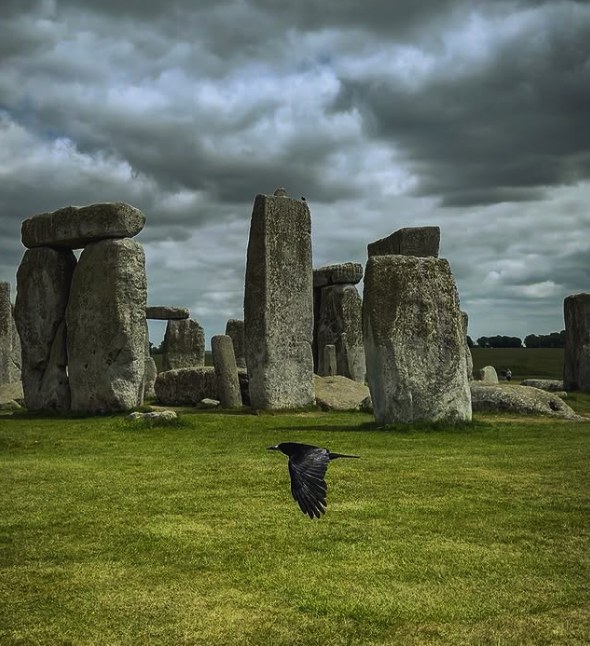
10. The lintels are pegged on, not balanced. Each upright carries a protruding tenon and each lintel a matching mortice hole.
11. The lintels also lock into each other. End-to-end tongue-and-groove joints turned them into a continuous ring rather than a row of separate slabs.
12. Those are woodworking joints. Carpentry, cut in stone weighing tons, by builders who came from a tradition of timber structures.
13. Each stone was tipped into a hole with one sloping side, then hauled upright with plant-fibre ropes and, most probably, a wooden A-frame.
The alignment, and the myth
14. It points both ways. The axis catches midsummer sunrise in one direction and midwinter sunset in the other, and there is a marker set into the path that shows you the line.
15. The midwinter alignment may be the important one. It is the more precise of the two, and the animal-bone evidence from Durrington Walls two miles east points to midwinter feasting.
16. The Druids did not build it. They belong to the Iron Age, roughly two thousand years after the stones went up. The association comes from an eighteenth-century antiquarian and it has comfortably outlived the evidence.
The one that surprises people most
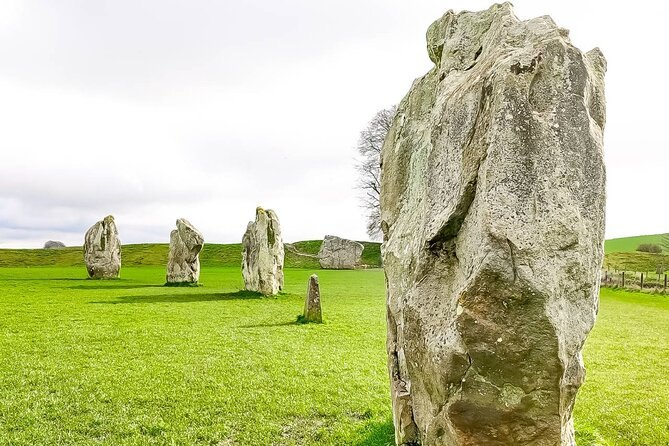
17. It is not the largest stone circle in Britain. Avebury is, by a wide margin — big enough to hold a village inside it, free to walk into, and twenty-five miles up the road. The two share a single UNESCO World Heritage listing, inscribed together in 1986.
Two more that change how you plan the day
The monument closes exactly one day a year, on 25 December, and rain has never closed it at all — it is a field, and every departure from London runs in whatever the weather does. The one thing weather can affect is Stone Circle Access, where entry into the ring may be withdrawn and a guided visit beyond the walkway goes ahead instead.
And the stones are not beside the car park. A shuttle runs between the visitor centre and the monument field, covered by your admission, with a walk across the fields as the better alternative whenever the weather allows.
✅ Useful Tip. If fact 17 has you curious, one departure from London visits both circles in a day and gives two hours at each — the contrast between a roped circuit and a circle you can walk straight into is the whole point of it. All Stonehenge tours from London are compared here.
The numbers, in one place
| What | Figure | Why it matters |
|---|---|---|
| First monument | about 3000 BC | A bank, a ditch and a ring of pits — no stones at all |
| Stone circle | about 2500 BC | The silhouette everybody photographs |
| Average sarsen | about 25 tons | Thirty of them, each shaped by hand on site |
| Heaviest stone | about 30 tons | The Heel Stone, outside the circle and never dressed |
| Bluestone weight | 2–5 tons | Small — which is what makes the journey so odd |
| Bluestone distance | over 150 miles | From the Preseli Hills in south-west Wales |
| Sarsen distance | about 25km | From West Woods, near Marlborough |
| World Heritage listing | 1986 | Inscribed with Avebury as a single property |
| Days closed a year | 1 | 25 December, and nothing else |
What the numbers do not tell you
Every figure above is a measurement, and measurements are the easy part. The thing that catches first-time visitors is scale, and scale does not survive a photograph: a twenty-five ton sarsen reads as a large rock until somebody walks past it, at which point the arithmetic lands.
The other thing the numbers miss is the ground. The circle sits on open chalk downland with a very wide sky over it, and the earthwork bank around the whole monument is so worn that most people walk over the oldest part of the site without registering it at all.
Three myths worth retiring
That it was a temple, definitively. Burial ground, calendar, healing site and gathering place have all been argued from the evidence, and the honest position is that the purpose is not settled. Anyone telling you otherwise is choosing a favourite.
That the stones were moved on wooden rollers. It is the illustration in every school textbook and there is no direct evidence for it here. Sledges, greased trackways and ropes are all plausible; rollers on chalk downland are the least plausible of the set.
That it is Britain’s oldest monument. It is not. The first phase is about 3000 BC, and there are older Neolithic long barrows and causewayed enclosures across southern England — several of them inside a short drive, as the landscape guide sets out.
Where these come from
The dating, the weights, the stone sources and the joints are all English Heritage’s published figures, and the 1986 inscription is UNESCO’s. Where something is genuinely contested — the bluestone route, which solstice mattered more — it is described as contested rather than settled. Read the fuller version in the history of the monument, plan the visit on the hours and tickets page, or check the practical detail in the questions travellers actually ask. If the solstice alignment is what caught you, the access dates are here.
Facts land harder in person. Stonehenge guided tours from London put a specialist beside you for the walk round, and the access departures put you inside the ring.
Departures that take the wider landscape in
Avebury, the Wiltshire countryside and the version with the longest stay at the circle.